
Jamaica
From Jamaica Air Service to the Lovebird: The Full Rise and Fall of Air Jamaica
For generations of Jamaicans, Air Jamaica was more than an airline. It was a national symbol, a flying piece of home, and one of the most recognizable Caribbean brands in aviation.
By Dwight Simpson / CanJam News
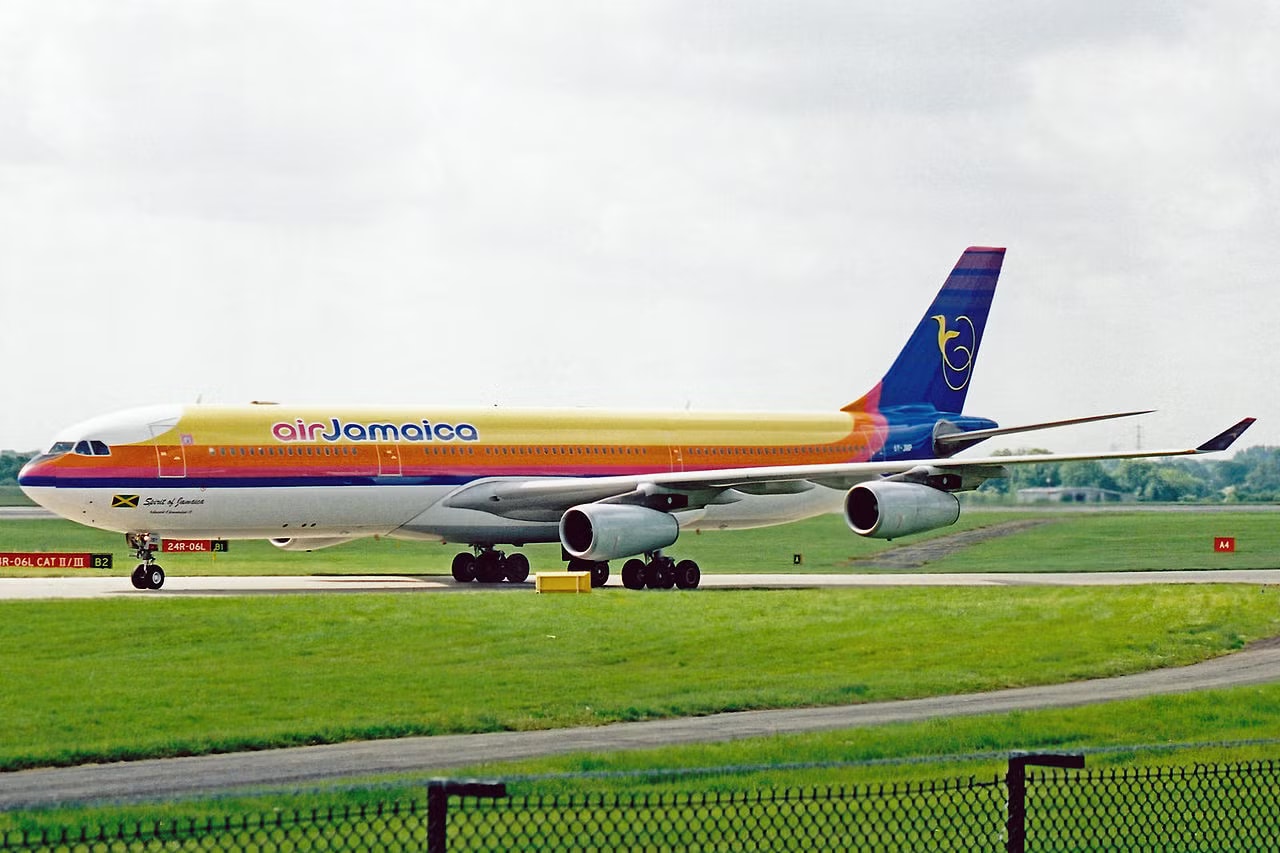
KINGSTON, JAMAICA — For generations of Jamaicans, Air Jamaica was more than an airline. It was a national symbol, a flying piece of home, and one of the most recognizable Caribbean brands in aviation.
Its famous hummingbird tail, colourful livery and distinctly Jamaican identity became known around the world. But the story of Air Jamaica began years before the airline officially took off under the name most people remember, and it ended after decades of expansion, privatization, government rescue attempts, mounting losses and an eventual takeover by Caribbean Airlines.
Before Air Jamaica: Jamaica Needed Its Own National Carrier
Jamaica became independent from Britain in 1962, and as the country developed its own national institutions, aviation became increasingly important to tourism, trade and international travel.
Before Air Jamaica existed in its best-known form, Jamaica relied heavily on regional and foreign airlines, including British West Indian Airways (BWIA) and the British Overseas Airways Corporation (BOAC).
In 1963, Jamaica established an airline operation known as Jamaica Air Service Ltd. The Jamaican government held a controlling interest, while BOAC and BWIA were also involved. The arrangement was designed to give Jamaica greater control over air links while still relying on the experience and aircraft of established airlines.
Government records from the period show that Jamaica viewed a national carrier as an economic necessity rather than simply a matter of prestige. Tourism was becoming increasingly important, and dependable international air service was seen as essential to Jamaica's growth.
By May 1, 1966, services were operating between Jamaica and major American cities, including Miami and New York.
But Jamaica wanted greater independence over its airline.
The Birth of Air Jamaica
A new company, Air Jamaica (1968) Limited, was established in 1968.
The National Library of Jamaica's historical records include government ministry papers specifically dealing with the establishment of Air Jamaica in both 1968 and 1969, showing how significant the national project was at the time.
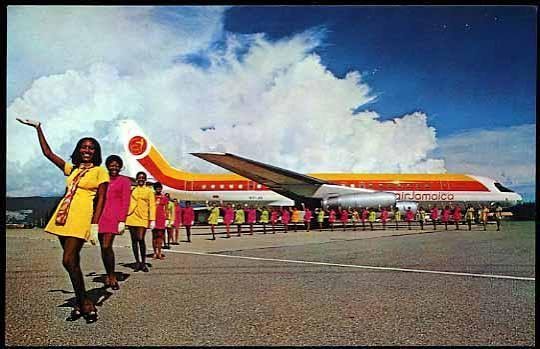
The new airline began operations on April 1, 1969, initially connecting Kingston and Montego Bay with New York and Miami.
Air Canada became an important early partner and minority shareholder in the new carrier. The airline initially operated aircraft including the Douglas DC-9 and leased DC-8 aircraft from Air Canada.
For a newly independent country, this was significant. Jamaica now had an airline carrying its own name, colours and identity to major international destinations.
Expansion Across North America
Air Jamaica expanded rapidly during the 1970s.
By the end of 1973, its aircraft were flying to cities including New York, Miami, Toronto, Chicago, Philadelphia and Detroit.
The airline's North American network helped connect Jamaica with its rapidly growing diaspora while also bringing thousands of tourists to the island.
Toronto became especially important because of Canada's large Jamaican and Caribbean community.
Air Jamaica gradually became a familiar sight at airports throughout the United States and Canada.
Air Jamaica Crosses the Atlantic
The airline's ambitions went beyond North America.
In April 1974, Air Jamaica launched service to London, marking an important expansion into Europe.
The following year, Frankfurt, Germany, was added to the network.
At its height, Air Jamaica connected Jamaica directly with major cities throughout North America, Europe and the Caribbean.
The airline became known internationally for its Jamaican hospitality, colourful branding and distinctive onboard atmosphere.
For Jamaicans abroad, stepping onto an Air Jamaica aircraft often felt like arriving home before the aircraft had even landed.
The Famous Lovebird
Air Jamaica eventually became known affectionately as the "Lovebird."
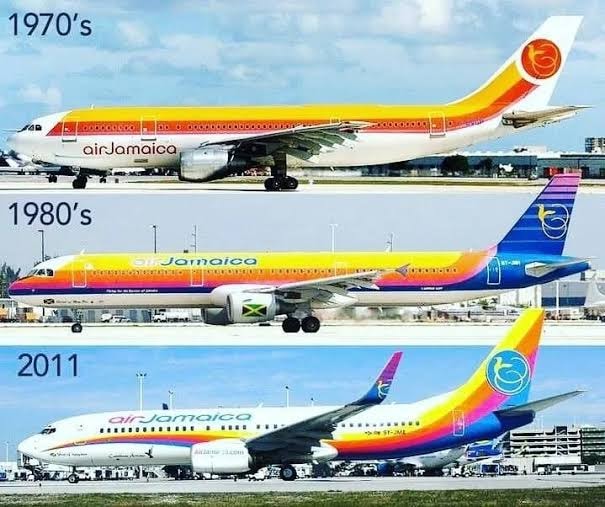
Its hummingbird logo and colourful aircraft became deeply associated with Jamaican national identity.
The airline's advertising frequently emphasized Jamaica's culture, hospitality and tourism appeal.
Air Jamaica therefore became more than transportation. It was part of the country's tourism marketing and international image.
Growth Came With Financial Problems
Despite the popularity of the airline, Air Jamaica struggled financially for much of its existence.
Running an international airline is extremely expensive. Aircraft purchases and leases, fuel, maintenance, airport charges, staffing and competition all placed considerable pressure on the company.
Air Jamaica continued expanding its network, but profitability remained difficult.
By 2010, contemporary reporting noted that the airline had recorded losses in 40 of its 44 years of existence.
Those losses would ultimately become one of the central reasons the government decided it could no longer continue operating the airline in its existing form.
Privatization in the 1990s
In 1994, the Jamaican government privatized Air Jamaica.
The government retained a minority interest while private investors assumed control of most of the company.
Official government financial records show Jamaica retained 25 percent of the ordinary shares, with an additional five percent intended for an employee share ownership arrangement.
The privatized airline attempted to modernize and expand.
Air Jamaica later became strongly associated with businessman Gordon "Butch" Stewart, whose investment group participated in the privatization period.
The airline adopted newer aircraft, expanded routes and attempted to strengthen its position as one of the Caribbean's leading international airlines.
But financial problems continued.
Government records indicate that Jamaica provided approximately US$169 million in loans and assistance during the privatization period.
Jamaica Takes the Airline Back
By the early 2000s, Air Jamaica's financial situation had become increasingly difficult.
In December 2004, the Jamaican government regained full control of the airline.
According to Jamaican government financial disclosures, the government purchased the remaining 75 percent of the ordinary shares for US$1 and converted approximately US$395 million in liabilities owed to the government into equity.
Air Jamaica was once again effectively a government-owned national carrier.
But the financial burden continued.
A Modern Airbus Fleet
During its later years, Air Jamaica became known for operating Airbus aircraft.
Its fleet included models from the Airbus A320 family, which became the backbone of the airline's regional and North American services.
The airline continued serving major destinations from Kingston and Montego Bay, including New York, Fort Lauderdale, Philadelphia, Toronto and other cities.
For many Jamaicans, this period represented the Air Jamaica they remember most clearly: bright tropical liveries, Airbus aircraft and the hummingbird tail arriving at airports throughout North America.
Another Attempt to Sell Air Jamaica
By 2007 and 2008, the Jamaican government again concluded that it could not continue financing the airline indefinitely.
The government began another privatization process.
Official government disclosures say the decision to re-privatize Air Jamaica was taken during fiscal year 2007/08.
The government searched for investors and potential buyers.
At one stage, negotiations took place with private investment groups, but a final transaction did not materialize.
Eventually, discussions began with Caribbean Airlines, the Trinidad and Tobago-based carrier that had replaced BWIA.
In early 2010, Jamaican Prime Minister Bruce Golding told Parliament that negotiations with Caribbean Airlines were well advanced.
Air Jamaica Begins Shrinking
As the takeover approached, Air Jamaica began reducing its fleet and network.
In February 2010, the airline announced that its fleet would be reduced to just six aircraft.
Routes including Orlando, Chicago, Curaçao, Havana, Nassau and some Caribbean services were suspended as the airline concentrated on its most important markets.
By April 2010, Air Jamaica planned to operate approximately 161 weekly flights between Jamaica and five major cities, including New York, Fort Lauderdale, Baltimore, Philadelphia and Toronto.
The airline that had once flown across Europe, North America and the Caribbean was rapidly becoming much smaller.
The End of Air Jamaica as Jamaica's Government Airline
The decisive moment came on April 30, 2010.
Air Jamaica was effectively divested, and legally the original Air Jamaica operating company ceased functioning as an independent airline.
On May 1, 2010, Caribbean Airlines assumed Air Jamaica's routes and operational responsibilities.
In exchange, the Jamaican government received a 16 percent ownership stake in Caribbean Airlines, valued at approximately US$28.5 million.
More than 1,500 Air Jamaica employees were made redundant, although many were later temporarily rehired by Caribbean Airlines during the transition.
For many Jamaicans, April 30, 2010 marked the real end of their national airline.
The Air Jamaica Name Continued for a While
Air Jamaica did not disappear immediately from the skies.
Caribbean Airlines continued operating some flights using Air Jamaica aircraft, crews and branding during a transition period that was expected to last between six and 12 months.
Passengers still saw the familiar Air Jamaica colours and Lovebird branding.
The two airlines gradually combined airport operations, reservations, routes and staff.
For example, by October 2010 Air Jamaica passengers at Toronto Pearson were being directed to Caribbean Airlines check-in facilities as the carriers integrated their operations.
In January 2011, the Air Jamaica brand was briefly relaunched with a Caribbean Airlines Boeing 737-800 carrying a modified Air Jamaica-style livery.
But the transition was clearly moving toward one airline.
Caribbean Airlines Becomes Jamaica's National Carrier
On May 27, 2011, Jamaica and Trinidad and Tobago finalized a shareholding agreement.
The Jamaican government formally held its 16 percent interest in Caribbean Airlines, and Caribbean Airlines became Jamaica's designated national carrier for the routes formerly operated by Air Jamaica.
On July 1, 2011, flights associated with the former Air Jamaica operation began using Caribbean Airlines' BW airline code.
The independent Air Jamaica identity was effectively disappearing.
Over the following years, the Lovebird brand gradually vanished from scheduled passenger service.
Why Did Air Jamaica Fail?
There was no single reason.
Air Jamaica faced a combination of problems that affected many small national airlines.
Chronic operating losses: The airline struggled to generate consistent profits despite strong brand recognition.
Government financial support: Successive Jamaican governments spent hundreds of millions of dollars keeping the carrier operating.
High operating costs: Fuel, aircraft leases, maintenance and international airport charges placed significant pressure on the airline.
Competition: Larger American, Canadian and Caribbean airlines increasingly competed on Jamaica's most profitable routes.
Network complexity: Operating long-haul routes from a relatively small home market made it difficult to achieve the economies of scale enjoyed by larger carriers.
Repeated ownership changes: Government ownership, privatization and re-nationalization created years of restructuring and uncertainty.
Eventually, the Jamaican government concluded that maintaining an independently operated national airline was financially unsustainable.
What Air Jamaica Meant to Jamaica
Despite its financial problems, Air Jamaica left a major cultural legacy.
It carried millions of Jamaicans between the island and communities abroad.
It transported tourists who helped build Jamaica into one of the Caribbean's most recognizable destinations.
It employed thousands of pilots, flight attendants, engineers, mechanics, airport workers, reservation agents and other employees.
And it represented Jamaica every time its colourful aircraft arrived at an international airport.
For members of the Jamaican diaspora, Air Jamaica was often emotionally connected with returning home.
Passengers remember the Jamaican accents of the crew, the music, food, hospitality and bright tropical aircraft.
Its slogan and reputation effectively promised something larger than transportation: a piece of Jamaica in the sky.
Could Air Jamaica Ever Return?
The Air Jamaica story still raises an obvious question among aviation enthusiasts and Jamaicans around the world: could the Lovebird ever fly again?
The original Air Jamaica airline no longer exists as the national carrier it once was, and Jamaica now relies heavily on foreign carriers and Caribbean Airlines for international connectivity.
Restarting an airline under the Air Jamaica name would require enormous investment, aircraft, regulatory approvals, airport slots, experienced management and a sustainable business model.
But the strength of the Air Jamaica brand remains undeniable.
Even more than a decade after the airline disappeared, photographs of its aircraft continue to generate nostalgia among Jamaicans at home and abroad.
That is perhaps Air Jamaica's greatest legacy.
The company may have stopped operating, but for generations of Jamaicans, the Lovebird never completely disappeared.
CanJam News
Source & attribution
Reporting by CanJam News. Information in this article is based on publicly available statements and verified reporting available at publication.
Topics